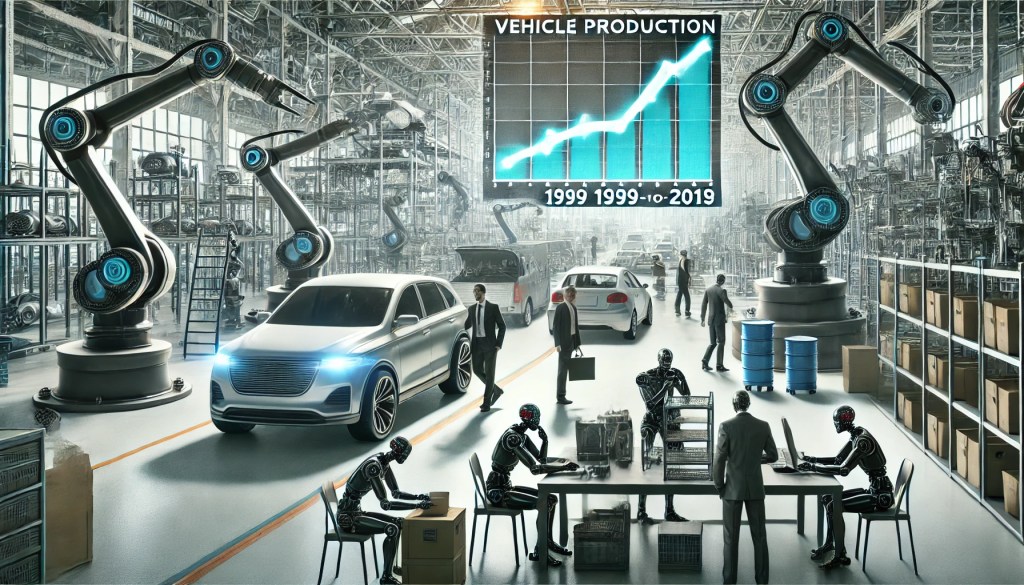
Automation has become a defining force in the modern workplace, driving unprecedented productivity while simultaneously reshaping the employment landscape. When I worked with a major automobile manufacturer in India in 1999, the company sold 1.3 million vehicles annually with 16,000 employees. By 2019, the same company sold 4.6 million vehicles, but with only 8,500 employees. This staggering jump in per-person productivity was made possible by automation and streamlined operations.
This trend extends beyond just the automobile industry. Across sectors, automation is streamlining operations and driving efficiency, reshaping the way we work.
The Scope of Automation’s Reach
According to McKinsey & Company, by 2030, up to 800 million jobs globally could be automated, with the U.S. alone facing the potential automation of 39-73 million jobs in areas like manufacturing, customer service, and data entry.
Opportunities in the Change
New technologies have always replaced old ones, and humans, as a species, have consistently adapted. However, while society at large will adjust and thrive in this new era, individuals with obsolete skills may not. Many people face the risk of job displacement without clear paths to new employment, and this will undoubtedly impact families and communities, creating a bleak scenario for some. If you look around, you can already see this shift happening, and it’s likely to accelerate.
Yet, despite the challenges, automation also brings opportunities. The key to success in this evolving landscape is adaptability and continuous learning. The demand for skills in AI, machine learning, healthcare, education, and roles requiring soft skills, problem-solving, and creativity is increasing. To stay competitive, professionals must proactively engage in reskilling and upskilling. The more specialized your work and the greater your technical mastery, the more irreplaceable you become.
Strategies for Staying Ahead
- Continuous Learning: Invest in online courses, webinars, and certifications through ed-tech platforms like Coursera, Udemy, or edX. Focus on skills that build on your existing expertise while opening doors to emerging fields.
- Leveraging Technology: Use AI-driven tools and software to boost your productivity. Project management software, productivity improvement apps, data analytics platforms, and collaboration tools can optimize your workflow, making you more efficient and effective.
- Networking and Mentorship: Build a strong professional network through platforms like LinkedIn. Seek mentorship from industry experts who can offer insights and guidance, helping you navigate the complexities of a changing job market.
Automation is here to stay, and while it brings challenges, it also offers extraordinary opportunities for those willing to adapt. By embracing continuous learning and leveraging technology, you can not only stay relevant but thrive in the future of work.



 Growth Factorials
Leave a comment