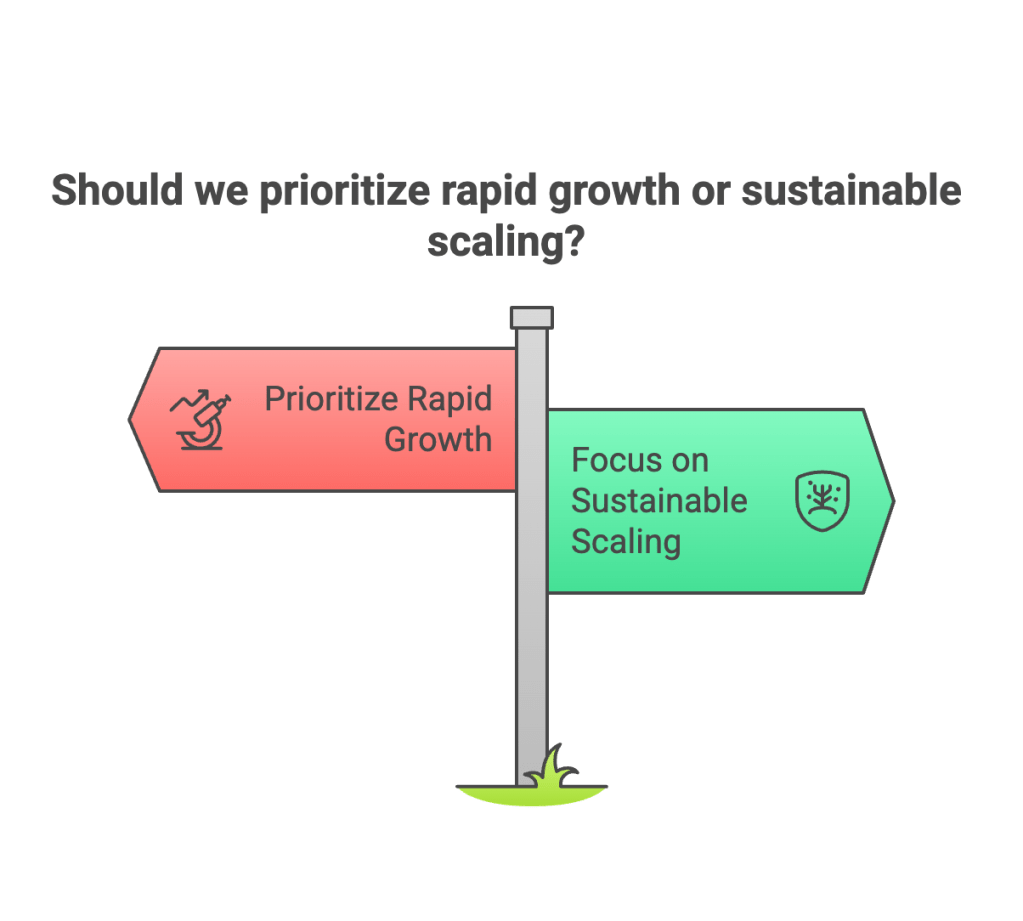
The mantra “growth at all costs” is often seen as the ultimate measure of success in the world of startups. Founders chase rapid expansion—more users, more revenue, and greater market share—with the belief that scaling quickly is the only way to outpace competitors. However, research and real-world examples increasingly show that uncontrolled expansion can expose startups to serious risks if the fundamentals have not been built well.
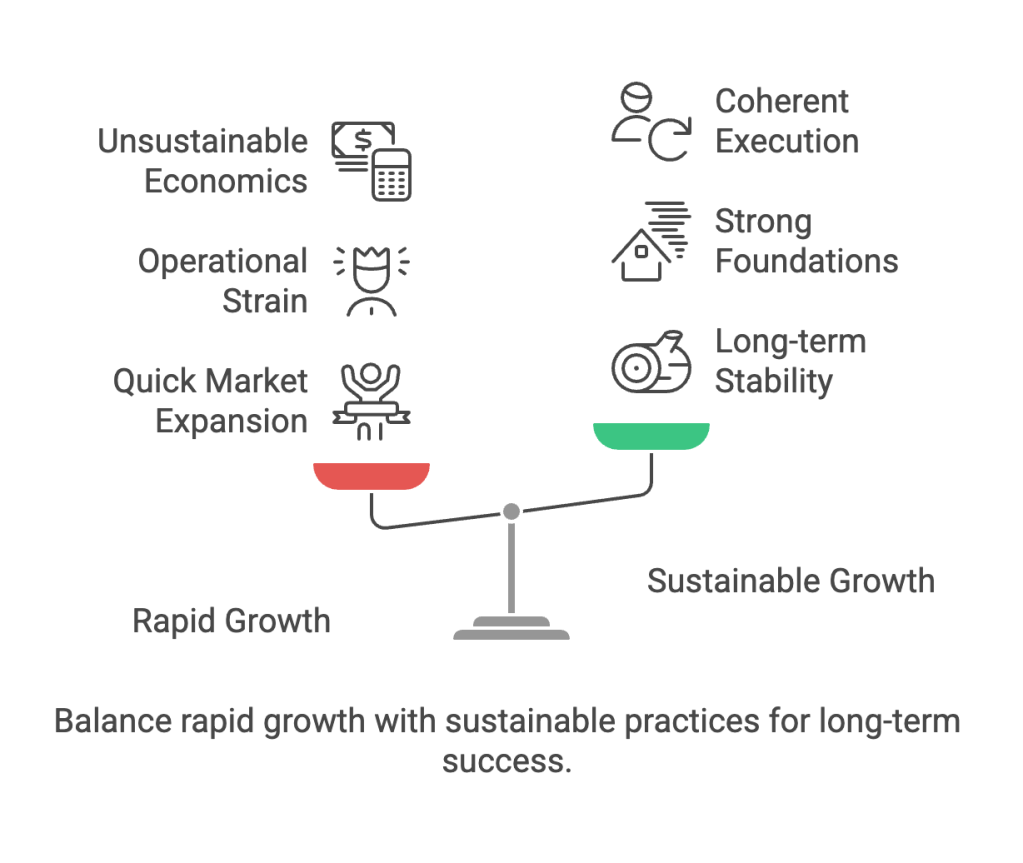
Many startups stumble not because of intense competition or lack of funding, but because rapid scaling can strain operational capabilities and mask unsustainable unit economics. When growth is pursued without a firm foundation, the very elements that drive long-term success—quality, efficiency, and coherent execution—can begin to crumble.
The Growth Myth and the Lure of Vanity Metrics
The startup ecosystem often rewards companies that showcase explosive top-line numbers. Yet, these “vanity metrics” (user counts, revenue spikes, market share) can be deceptive. They paint a picture of success that may not reflect the underlying health of the business. Overemphasis on these metrics can lead founders to overlook critical drivers such as customer satisfaction, operational efficiency, and profitability.
Studies consistently warn that aggressive scaling without operational discipline tends to lead to cash flow problems, diluted brand promise, and ultimately, a market correction. It is a reminder that every new market or customer segment must contribute positively to the overall sustainability of the business.
Case Study: OYO’s Early Journey
OYO’s early journey offers a compelling, if nuanced, example of these dynamics. In its early years, OYO was seen as a disruptive force in the hospitality industry. With its rapid expansion across India and into international markets, OYO promised to redefine budget lodging through a technology-driven model. However, this rapid scaling brought several challenges:
- Operational Inconsistencies: OYO expanded its footprint at a breakneck pace, sometimes outpacing its ability to standardize quality across its vast network of partner properties. In an industry where customer trust is paramount, even minor lapses in service can significantly harm the brand.
- High Burn Rate and Cash Flow Pressures: The aggressive expansion strategy demanded massive capital investments—from marketing to property acquisitions. This led to a high burn rate, putting considerable pressure on cash flows and exposing cracks in the company’s financial structure.
- Strained Partner Relationships: As the company grew, the rapid pace of change sometimes led to mismatches between the brand promise and the service delivered. Many property owners and partners were not aligned with Oyo’s promises, which, over time, eroded the consistency and reliability that are essential for long-term success.
It’s worth noting that OYO has recognized these challenges and is currently transforming itself.
Key Learnings for Sustainable Growth
OYO’s experience offers several detailed and nuanced lessons for startups seeking to scale sustainably:
- Prioritize Sustainable Unit Economics: Every new customer or market should enhance your bottom line. Relying solely on growth metrics like user acquisition can mask deeper issues such as low profitability or high churn rates. It’s essential to constantly evaluate the cost of acquiring and serving a customer. This means not only tracking metrics like customer acquisition cost (CAC) but also understanding customer lifetime value (CLV) and ensuring that the ratio between the two remains healthy. Regularly review financial models, run scenario analyses, and pivot if you notice that each additional unit of growth is dragging down overall profitability.
- Build Robust Operational Foundations: A startup’s ability to scale is directly linked to its operational systems. When growth is too rapid, existing processes and infrastructures can break down, leading to inconsistent quality and service delivery. Investing in scalable technology, training, and process documentation is a necessity. This might involve creating standardized operating procedures (SOPs), investing in quality management systems, or even rethinking the business model to focus on core strengths. Adopt an iterative scaling strategy. Pilot new initiatives in controlled environments, gather feedback and refine processes before rolling out on a larger scale.
- Adopt an Iterative and Measured Approach to Scaling: Rapid expansion often tempts founders to go “all in” at once. However, a measured approach allows you to test assumptions, adapt to feedback, and avoid overextending your resources. Iterative scaling is about balancing ambition with prudence. It’s not about slowing down growth but ensuring that each step is sustainable and builds on a stable foundation. Use phased rollouts for new markets or product lines. Set clear benchmarks for each phase and only proceed when you’ve validated that the expansion is adding value without compromising core operations.
- Maintain Strategic Focus and Preserve Company Culture: Rapid scaling can lead to a dilution of company culture, which is often the glue that holds a startup together. As teams expand, maintaining a unified vision becomes more challenging but is critical for long-term success. Culture is built by driving consistent daily behaviours, shared values, and practices. When scaling, it is vital to ensure that new hires are not only skilled but also a good cultural fit. Invest in robust onboarding programs, foster open communication channels, and regularly revisit your company’s core values to ensure they are reflected in every decision.
Balancing Ambition with Discipline
The startup growth trap reminds us that while rapid expansion is enticing, it must be balanced with a disciplined, measured approach. OYO’s early overexpansion illustrates that without sustainable unit economics, robust operational systems, and a keen focus on maintaining culture, growth can quickly become unsustainable.
For founders, the challenge is to remain ambitious while ensuring that every step of the journey is built on a solid foundation. By focusing on sustainable metrics, building robust processes, and scaling iteratively, startups can avoid the pitfalls of overexpansion and create businesses that stand the test of time.



 Growth Factorials
Leave a comment