Recently, one of the most successful edtechs in the world, Duolingo, released its handbook for what makes it work. It is an inspirational document that shows how a bold vision combined with a culture code and shared principles can build an innovative and successful organization. In this post, we will discuss the inspiring ideas given in the handbook as well as how universal they can be in their application.
A Mission-Driven, Long-Term Mindset
Duolingo believes in creating the best education for everyone. They focus on building a strong, long-lasting experience rather than chasing quick wins. For example, they choose to limit ads even if it means less immediate profit. This decision builds trust and keeps users coming back.
- Focus on the future: They design features that will serve users well for years.
- User trust is key: Keeping the experience clean and engaging helps build loyalty.
The Five Key Principles
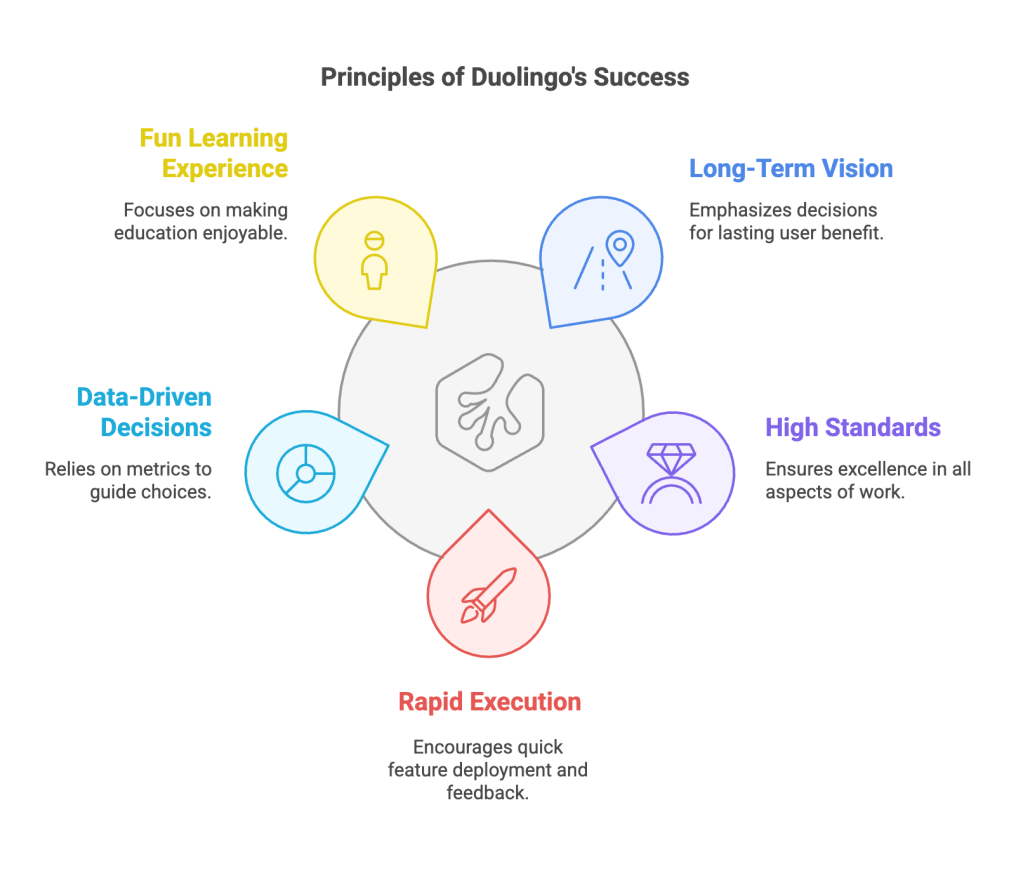
These five principles are the core of the Duolingo handbook.
- Take the Long View: Duolingo believes that building something lasting means making decisions that benefit users in the long run, even if those choices come at the expense of immediate gains. For example, rather than bombarding users with ads to boost short-term revenue, Duolingo opts for a cleaner learning experience that builds trust and loyalty over time. This approach encourages patience, continuous improvement, and investments that may only show their full value years later.
- Raise the Bar: Excellence is not optional, it is the standard expectation from everyone at Duolingo. This principle demands that every aspect of work, from product design and user experience to hiring practices, meets a high level of quality. Duolingo insists on recruiting talent that not only excels technically but also fits the company’s culture of excellence. By setting and maintaining high standards, every feature and interaction is refined to ensure that users always receive a polished and effective product.
- Ship It: In today’s tech-enabled world, speed matters. “Ship It” is the call to action for rapid experimentation. Instead of waiting to perfect every detail, Duolingo focuses on getting a high quality and workable version of a feature into the hands of users quickly. This fast-tracked approach lets the team gather real-world feedback, learn from the results, and iterate rapidly. The idea is that real data and user reactions are far more instructive than endless internal debates.
- Show Don’t Tell This principle champions a data-driven approach. Rather than relying on lengthy explanations or narratives, Duolingo lets measurable outcomes speak for themselves. By using metrics—such as user engagement, retention, and A/B test results—the company makes decisions based on what actually works in practice. This approach builds accountability and keeps the focus on tangible results rather than just theories.
- Make It Fun At its heart, Duolingo is about making learning enjoyable. The “Make It Fun” principle drives the playful and engaging design of the app. Whether it is through gamified lessons, quirky characters, or creative marketing campaigns, the goal is to transform education into a delightful and engaging experience. When learning is fun, users are more likely to stick with it, and a strong, memorable brand is built over time.
The Green Machine Framework
The Green Machine is Duolingo’s step-by-step process for transforming ideas into successful projects. It is a practical framework that ensures innovation with rapid execution and smart, sustainable growth.
- Hire Great People The foundation of any successful project is a strong team. Duolingo places a premium on hiring talented individuals who share the company’s values and commitment to excellence. This ensures that every project is driven by passionate, skilled professionals who are willing to push boundaries.
- Define Success Before starting a project, clear, measurable goals must be set. Otherwise, you can always term a project successful by defining the success parameters retrospectively. Defining success early provides a roadmap for the team and establishes benchmarks against which progress can be measured. These goals might include specific metrics like user engagement rates, retention numbers, or other key performance indicators.
- Set Guardrails and Think Long-Term Guardrails are the constraints that keep every project aligned with the company’s long-term vision. They help ensure that quick fixes or shortcuts do not compromise the overall mission. This step balances speed with sustainability, making sure that every decision contributes to a lasting, high-quality product.
- Build the Thing and Set Up Feedback Loops The next step is to rapidly develop a working version of the product or feature and then gather feedback from real users. Continuous feedback loops—through testing, analytics, and direct user input—allow the team to quickly identify what works and what needs improvement. This iterative process is key to refining ideas in an ever-changing market.
- Execute with Urgency and Excellence Once the feedback is in, it is time to act fast. This step emphasizes the importance of moving quickly while maintaining high standards. The focus is on timely execution that meets the set benchmarks.
- Double Down on What Works, Stop What Doesn’t Finally, the team reviews the outcomes. Successful experiments are scaled up. Resources are allocated to what is proven to work, while ideas that don’t meet expectations are cut short. This decisive approach ensures that efforts are concentrated on high-impact projects and that the overall strategy remains agile and responsive.

Where This Approach Works Best
The Duolingo handbook is the right framework for environments where innovation and engagement are vital. Duolingo’s ideas are especially useful in these situations:
- Startups and Tech Companies: Fast testing and clear goals help validate ideas quickly.
- Consumer Apps: Fun, engaging designs build strong, loyal user bases.
- Creative Industries: Bold and unique ideas can lead to breakthrough campaigns.
- Educational Tools: A long-term focus keeps learning at the center without sacrificing quality for quick profits.
In these settings, the combination of speed, quality, and creativity creates a powerful formula for sustained success.
Where It Might Not Work as Well
Here are a few scenarios where the Duolingo playbook might not work:
- Highly Regulated Sectors: Industries like healthcare or aviation need extensive testing and caution.
- Short-Term Profit Models: Businesses focused on immediate gains might not invest in projects that pay off slowly.
- Traditional Manufacturing: Industries with long production cycles often require slower, more planned processes.
- Risk-Averse Cultures: Organizations that avoid risks might struggle with rapid changes and open feedback.
- Risk of Dilution: With a strong focus on fun and experimentation, there is a chance that the core educational goals might get diluted. Balancing entertainment with effective learning remains a constant challenge. Many educationists have questioned the learning impact Duolingo has been able to create on learners.
- Scalability Concerns: As companies grow, maintaining agility can be difficult. The handbook doesn’t fully address how to scale these principles in larger, more complex organizations.
Recognizing these limitations is as important as celebrating the successes. While the Duolingo model is inspiring, its application requires careful adaptation to the unique demands of different industries and scenarios.
Takeaways
Duolingo’s handbook shows a clear approach to building innovative organizations and products by combining a strong long-term vision with a fast, user-focused, and experiment-driven process. By prioritizing user trust, quick feedback, and an engaging experience, it creates a foundation for sustainable growth. However, not every industry can or should move at the same pace, and it is important to adapt these ideas to fit different situations.
The biggest takeaway from Duolingo is to aim high, hire great talent, build a culture of excellence, and let experimentation guide your direction.



 Growth Factorials
Leave a comment